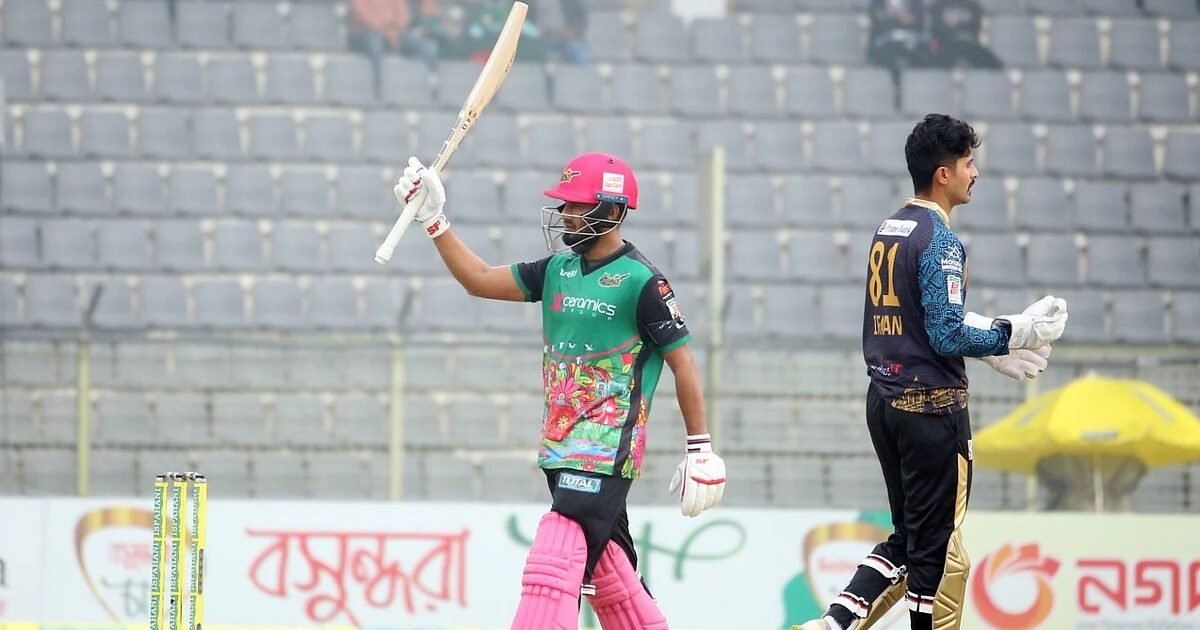
Dhaka: Bangladesh has a new domestic tournament — and it is unlike anything the country’s cricket has seen before. The Bangladesh Cricket Board (BCB) has launched the D-3 Trophy, a six-team competition that folds first-class, one-day and T20 cricket into a single franchise-owned framework, with the T20 leg set to begin on December 15 in Barishal.
Unveiled at a Dhaka event on September 27, the competition — D-3 for the three formats it covers — runs across the 2026-27 season. It is the board’s boldest attempt yet to give domestic cricket a franchise identity while repairing a calendar fractured by the suspension of the Bangladesh Premier League (BPL).
What is the D-3 Trophy?
The D-3 Trophy brings first-class (four-day), List A one-day and List A T20 cricket under one competition, with the same six franchises contesting all three formats. In total, 42 matches are scheduled: 19 T20s opening the tournament in December 2026, seven four-day fixtures in January 2027, and 16 one-day matches in May 2027.
The structure merges three existing competitions — the National Cricket League T20, the Bangladesh Cricket League four-day tournament and the BCL one-day event — into a single branded product. It does not replace the BPL: BCB president Tamim Iqbal clarified on September 28 that the franchise T20 league remains separate, currently paused while the board rebuilds its financial model.
The six franchises and their icon players
Six of Bangladesh’s leading corporate houses have signed three-year agreements to run the franchises, reportedly paying BDT 2.5 crore per season each, a figure that includes player match fees. The teams are Walton Group, Fortune Group, Citizens Bank, Seven Rings Cement, Ace Bluestar and Acme Laboratories.
Each franchise has been assigned an icon player drawn from the national setup: Mehidy Hasan Miraz (Walton), Towhid Hridoy (Fortune), Mosaddek Hossain Saikat (Acme), Mushfiqur Rahim (Seven Rings Cement), Nurul Hasan Sohan (Ace Bluestar) and Naim Sheikh (Citizens Bank). Squads will be completed at a players’ draft on October 26, where each team picks 23 cricketers to cover all three formats. A management draft to select coaching staff has already taken place.
Notably, the BCB will retain significant control over the competition’s finances despite the franchise branding — setting team spending limits and determining player and coaching salaries itself, a lesson drawn directly from the BPL’s troubles.
Barishal gets the spotlight
The T20 phase opens at Barishal’s Kabi Jibanananda Das Stadium, which has just undergone a Tk 65 crore modernisation after more than two decades of neglect. Barishal will also host the opening ceremony, playoffs and final, with some matches in Dhaka and Khulna being explored as a second venue. For a city that has waited years for top-level cricket, the D-3 Trophy is a homecoming as much as a launch.
The money: doubled match fees
Alongside the new structure, the BCB has approved a sharp rise in domestic match fees. Men’s four-day fees double from Tk 75,000 to Tk 150,000 per match, one-day fees rise from Tk 50,000 to Tk 100,000, and T20 fees jump from Tk 40,000 to Tk 80,000. Women’s cricketers get increases too, and the Bangladesh Under-19 daily allowance doubles to Tk 20,000.
The timing is deliberate. With no BPL this season, domestic players have lost their biggest payday of the year; the board is using the D-3 Trophy to fill part of that gap.
What about the BPL?
The D-3 Trophy exists partly because the BPL does not — at least not this season. In August, Tamim confirmed the 2026-27 BPL would not go ahead after the board absorbed losses of around Tk 40 crore across the last two editions, driven by franchise defaults on payments and bank guarantees. The board aims to complete a rebuilt franchise process by April or May 2027.
Read our full story on the BPL suspension here: BPL Cancelled: No Bangladesh Premier League This Season.
Why it matters
For years, Bangladesh’s domestic cricket has been criticised as fragmented and invisible — three competitions, little branding, minimal broadcast interest. The D-3 Trophy is the BCB’s answer: one product, recognisable teams and a season-long narrative. If the December T20 leg draws crowds in Barishal, the model could reshape how Bangladesh develops its next generation.